✠ PRIESTLY VOCATION – SECOND ROUND OF ADMISSIONS ✠
Application opportunity
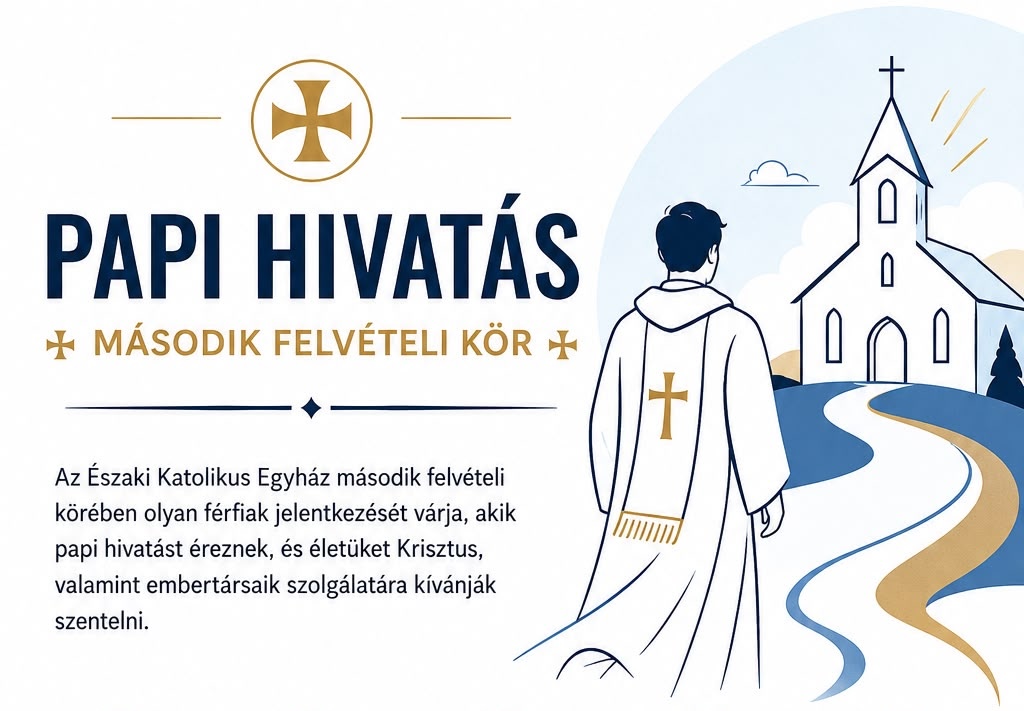
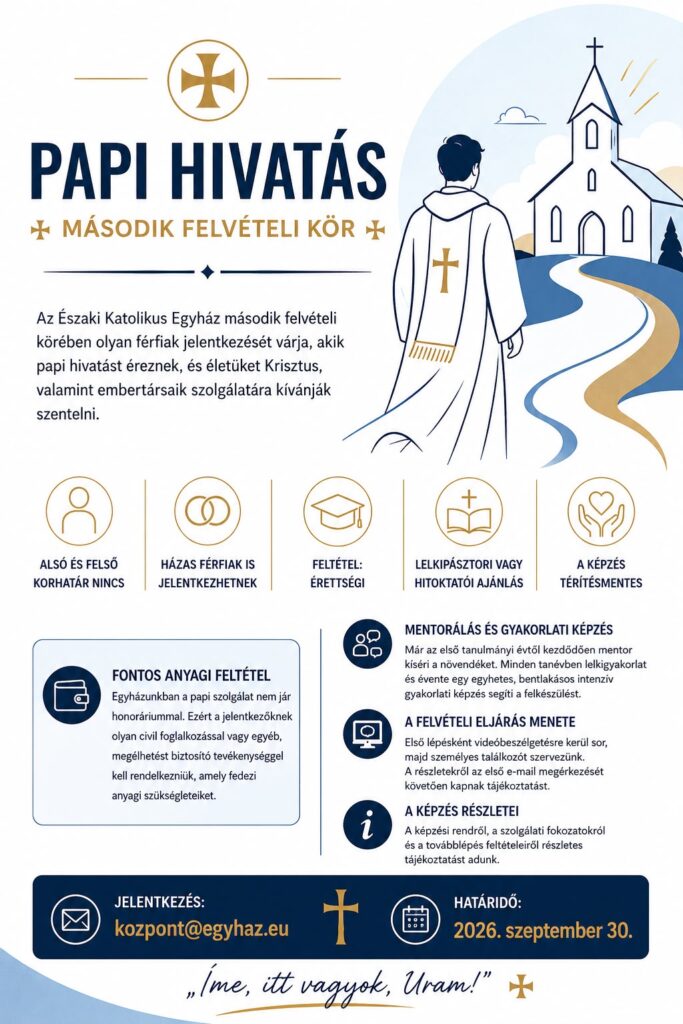
The Northern Catholic Church is expecting applications in its second admission round from men who feel a priestly vocation and wish to dedicate their lives to the service of Christ and their fellow human beings.
● There is no lower or upper age limit.
● Married men may also apply.
● The application requires at least a high school diploma.
● A pastoral or catechetical recommendation is required for the application.
● The training is free of charge.
Applicants will receive detailed information about the further conditions of application and the documents to be submitted.
Important information
In our Church, priestly service does not come with a fee. Therefore, applicants must have a civil occupation or other livelihood-providing activity that covers their financial needs.
The training of admitted candidates takes place according to the training schedule determined by the Church, taking into account their previous studies.
Applicants with theological qualifications
Applicants with theological qualifications who are admitted will participate in a two-year priestly and pastoral training according to the training schedule of the Northern Catholic Church.
The normal course of training:
● The candidate can be ordained lector and acolyte.
● At the end of the first semester of the second academic year, he can be ordained deacon if the clergy unanimously support the ordination and the bishop consents.
● Ordination to the priesthood can take place at the end of the second academic year, following successful completion of exams.
● Exams take place before a committee.
● The unanimous recommendation of the clergy and the approval of the bishop are required for ordination to the priesthood.
Applicants without theological qualifications
Applicants without theological qualifications who are admitted will participate in a five-year theological and pastoral training according to the Church’s internal training schedule.
At the same time, they will study psychology or social work at a college or university designated by the Church.
The normal course of training
● After successful completion of the first academic year, the candidate can be ordained lector.
● At the end of the second academic year, he can be ordained acolyte.
● At the end of the third academic year, he can be ordained subdeacon.
● After successful completion of the fourth academic year, he can be ordained deacon.
● Ordination to the priesthood can take place no earlier than after successful completion of the fifth academic year.
Conditions for advancement
Advancement to the various service levels is not automatic.
Before every advancement, the Church’s clergy evaluates:
● the candidate’s academic progress;
● spiritual and human maturity;
● community behavior;
● suitability for service.
Based on the evaluation, the clergy recommends or does not recommend the candidate’s advancement to the bishop. The final decision is always made by the bishop.
Mentoring and practical training
Training does not only mean academic preparation.
From the first academic year, the Church appoints a mentor for every admitted candidate. The mentor supports the candidate as a personal companion:
● in his studies;
● in spiritual development;
● in community integration;
● in clarifying his vocation.
The candidates:
● participate in a spiritual retreat every academic year;
● participate annually in a one-week, residential intensive practical training.
The purpose of the practical training is to prepare for pastoral, liturgical, community, and other services.
The admission procedure
The first step of the admission procedure is a video interview.
Following this, a personal meeting is arranged with candidates deemed suitable.
Applicants receive information about further conditions, necessary documents, formal requirements of the recommendation, and detailed admission procedure after the first email is received.
Application and inquiries
📧 kozpont@egyhaz.eu
🗓️ Application deadline: September 30, 2026.
“Here I am, Lord!” ✠