To declare your faith
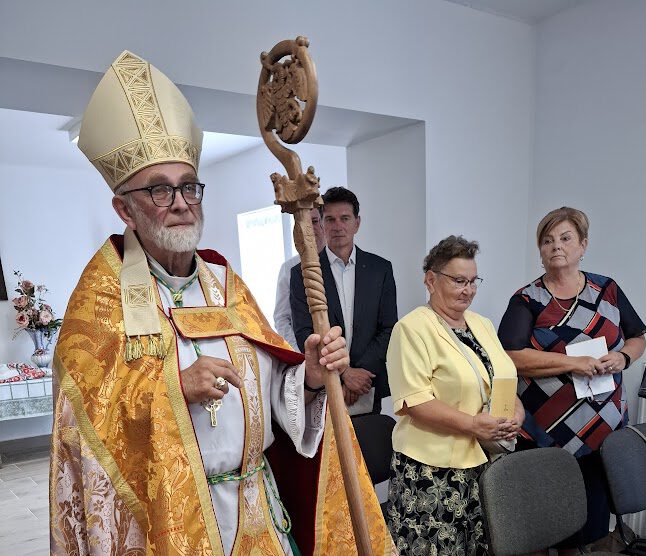
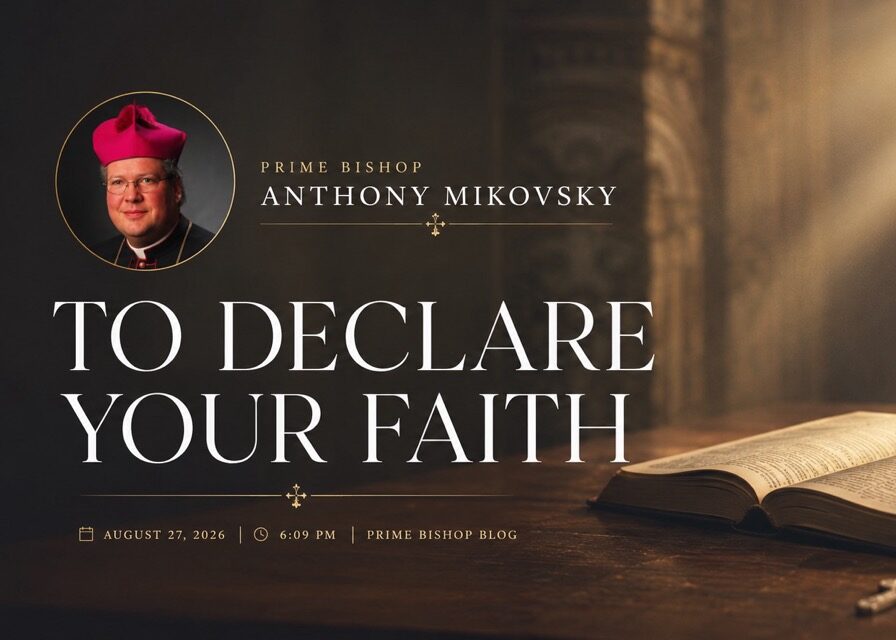
Anthony Mikovsky, the primate bishop of the Polish National Catholic Church (PNCC), in a meditation published on August 27, draws attention from the confession of faith of the Apostle Peter that the Christian faith cannot be exhausted by knowing the truths of faith. The confession of faith about Christ must transform the believer’s entire life.
At the center of the “To Declare Your Faith” writing is the question Jesus addressed to his disciples: “But who do you say I am?” Peter’s answer is well known: “You are the Messiah, the Son of the living God.” However, according to Mikovsky, the story is not only about Peter’s faith. Every Christian must personally answer this same question.
The primate bishop also recalls the gospel stories of previous Sundays. Peter was able to start walking on the water toward Jesus, but when his attention turned away from Christ and looked at the strong wind, he began to sink. Jesus then called him “little faith.” In contrast, the Canaanite woman did not perform any spectacular or extraordinary deed: she simply persistently followed Jesus, begged for his mercy, and did not let herself be deterred. Jesus said to her: “Great is your faith!”
Mikovsky points out from this that the greatness of faith does not necessarily manifest in extraordinary deeds. The Christian is not called to perform miracles or walk on water, but is called to respond to Christ’s question with their life.
A key thought of the meditation is the difference between knowing faith and living faith. Catechesis, studying the Scriptures, and learning Christian teaching are essential, but according to Mikovsky, all this is only preparation. The Christian calling means more: what we confess about Christ must also appear in our thoughts, words, and actions.
The primate bishop also draws attention to the fact that Jesus did not accidentally ask his disciples the question near Caesarea Philippi. They were in a region where many pagan cults were present. Mikovsky draws a parallel between the world then and today: even now, countless things try to capture not only a person’s attention but also their attachment and devotion.
“Everything that we place before our faith, trust, and devotion to Jesus becomes an idol for us” – he states in his writing.
Therefore, the question “Who do you say Jesus is?” cannot be answered merely with theologically correct words. The real question is how much this answer determines everyday life. Does it influence a person’s decisions, thinking, speech, and relationships with others? Is the relationship with Jesus only tied to Sundays, or is it present in daily life as well?
According to Anthony Mikovsky, the Creed recited at Sunday and festive Mass is therefore not the endpoint of the confession of faith but its beginning. The Christian’s entire life must bear witness to what they confess with their words.
At the end of his meditation, the primate bishop quotes from the morning prayers of the PNCC prayer book, in which the believer offers their whole day – thoughts, words, and deeds – to God.
At the center of the primate bishop’s message remains a simple but personal question: not only what we know about Jesus, but what our life says about who we consider Him to be.